
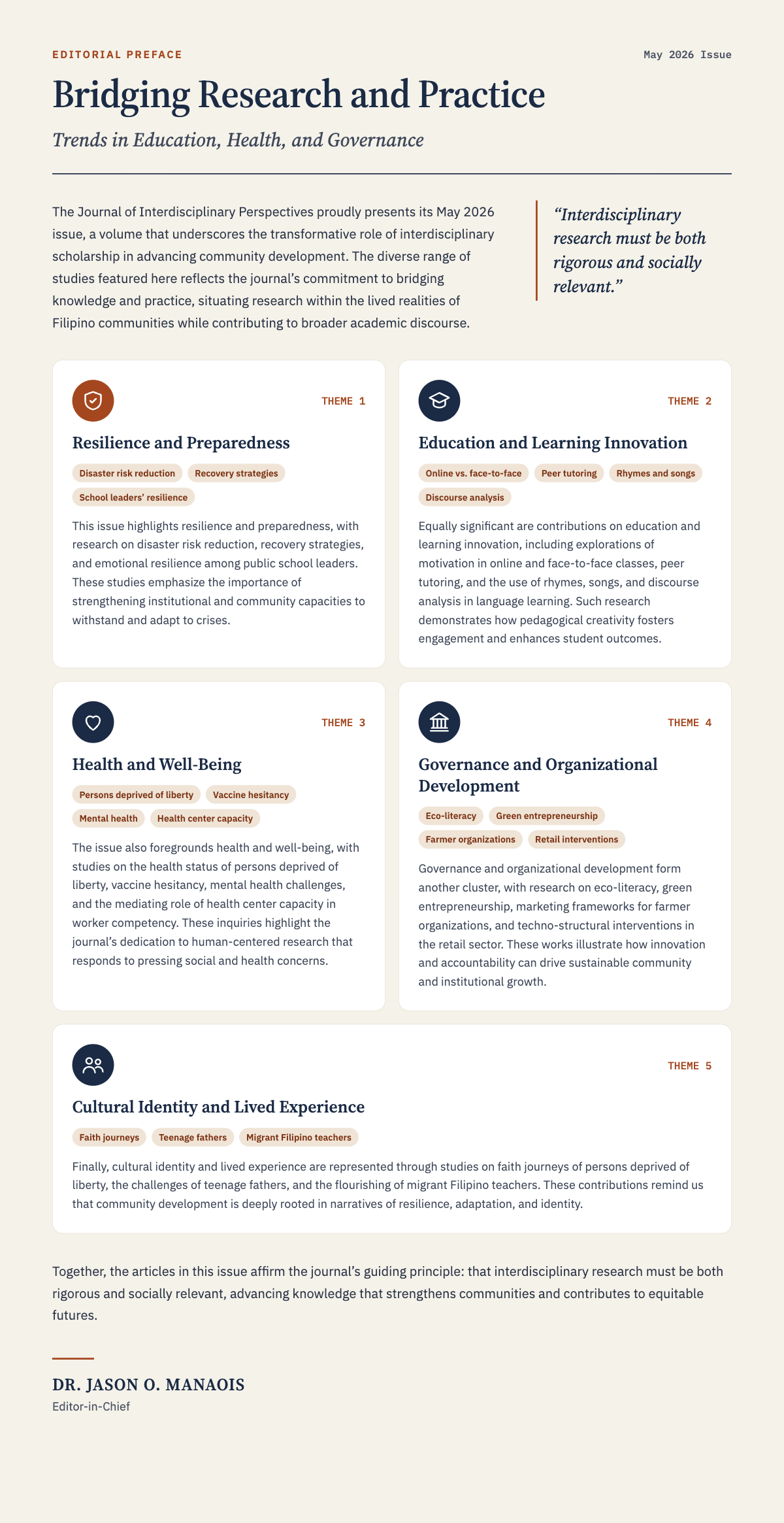
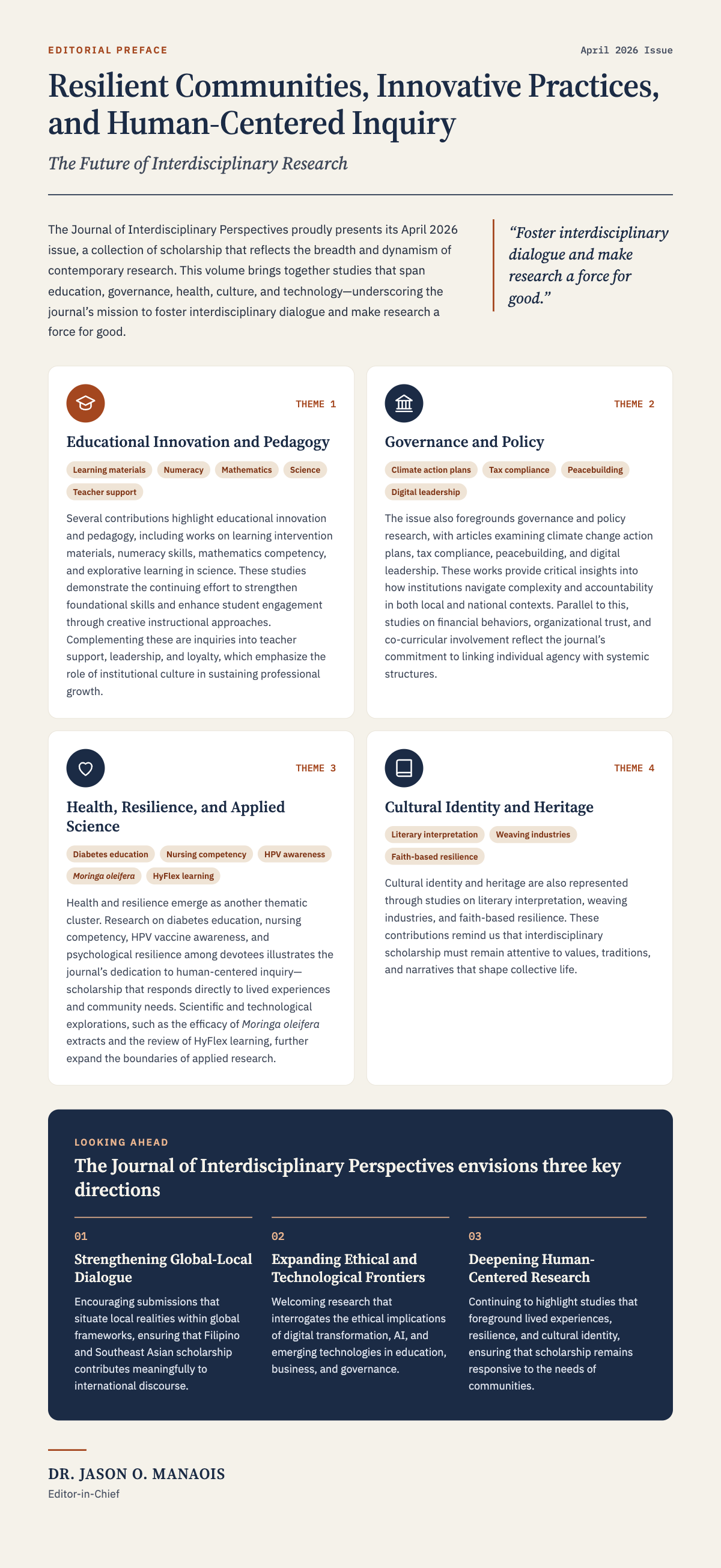
Archives
-
February 2026 Issue
Vol. 4 No. 2 (2026)EDITORIAL PREFACE
Interdisciplinary Pathways towards Sustainable Futures
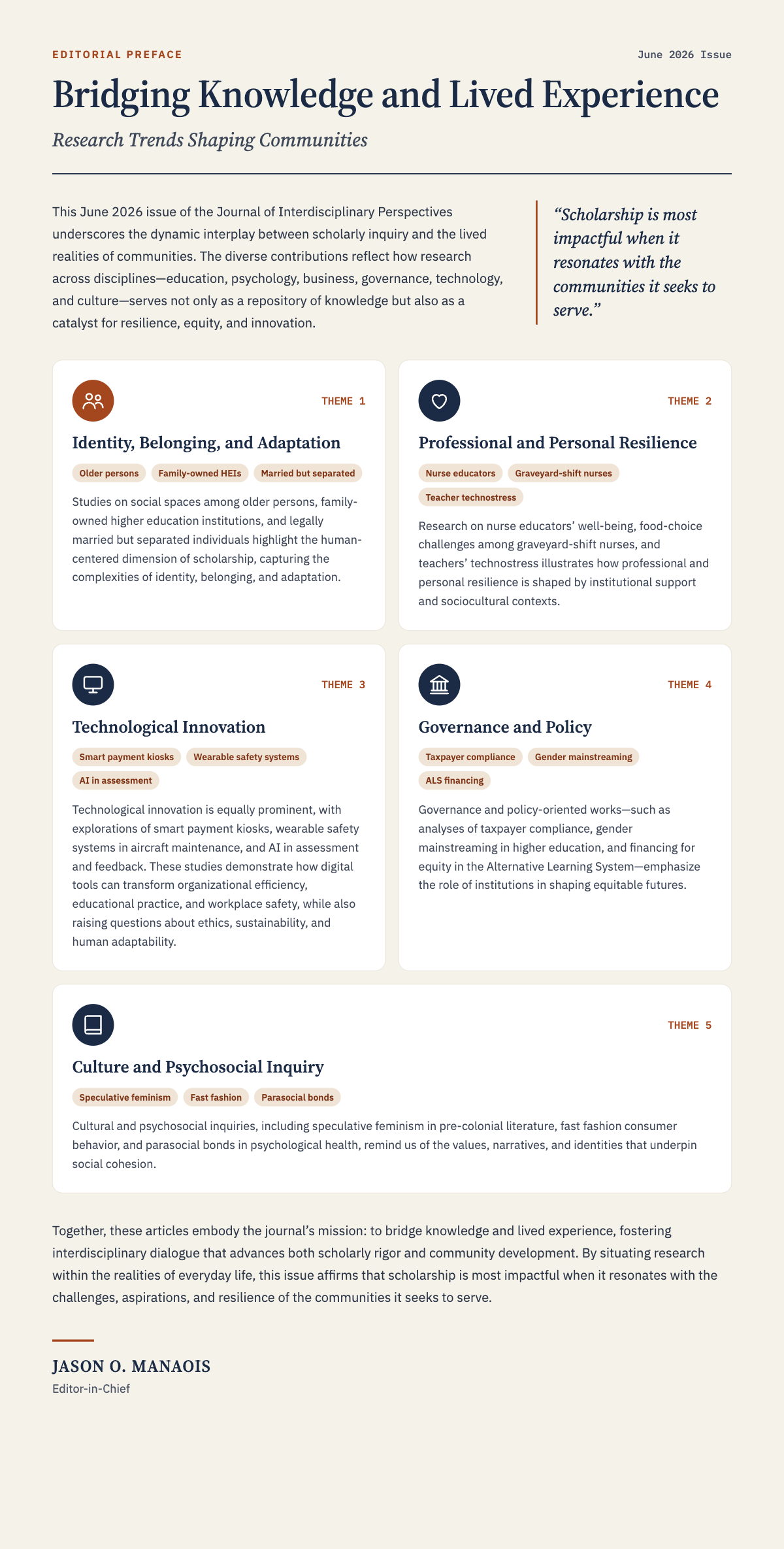
This February issue brings together a rich collection of research that highlights the journal’s commitment to advancing knowledge that is internationally relevant yet rooted in local context. The articles can be clustered around three thematic foci, each resonating with the United Nations Sustainable Development Goals (SDGs) and underscoring the importance for interdisciplinary collaboration. While the topics may appear distinct at first, they share common threads—social inequity, cultural transformation, and the pursuit of sustainable development—that connect them within the broader ASEAN experience.
The first cluster engages with resilience, caregiving, and community well-being, aligning with SDG 3 (Good Health and Well-Being) and SDG 5 (Gender Equality). These studies foreground the lived realities of families and caregivers, particularly within Southeast Asian contexts, and invite us to reimagine psychological support systems that are culturally sensitive and socially inclusive.
The second cluster focuses on education, curriculum innovation, and student-centered learning, directly linked to SDG 4 (Quality Education). Here, authors explore outcomes-based approaches, responsive pedagogy, and the integration of local values into higher education. These contributions remind us that education is not only a pathway to knowledge but also a vehicle for equity, empowerment, and sustainable development.
The third cluster highlights methodological rigor, transparency, and interdisciplinary inquiry, resonating with SDG 9 (Industry, Innovation, and Infrastructure) and SDG 17 (Partnerships for the Goals). By refining research designs and advocating for methodological defensibility, these papers emphasize that robust scholarship requires dialogue across disciplines—psychology, education, sociology, and beyond—to address complex challenges in holistic ways.
Together, these clusters illustrate that the pursuit of knowledge cannot remain siloed. The issues we face—whether in health, education, or social development—demand interdisciplinary perspectives that weave together diverse strands of expertise. As editor-in-chief, I invite readers to engage with this issue not only as a collection of individual articles but as a tapestry of interconnected insights, each contributing to the broader agenda of sustainable, inclusive, and transformative scholarship.
This issue is the product of collective effort. I extend my sincere thanks to the members of the editorial board whose dedication, critical insight, and collegial spirit ensured the rigor and quality of the articles selected. The coming together of this issue reflects not only the scholarship of our contributors but also the community work that sustains the journal’s mission.
DR. JASON O. MANAOIS
Editor-in-Chief -
January 2026 Issue
Vol. 4 No. 1 (2026)EDITORIAL PREFACE
Charting Interdisciplinary Pathways in Research and Professional Practice
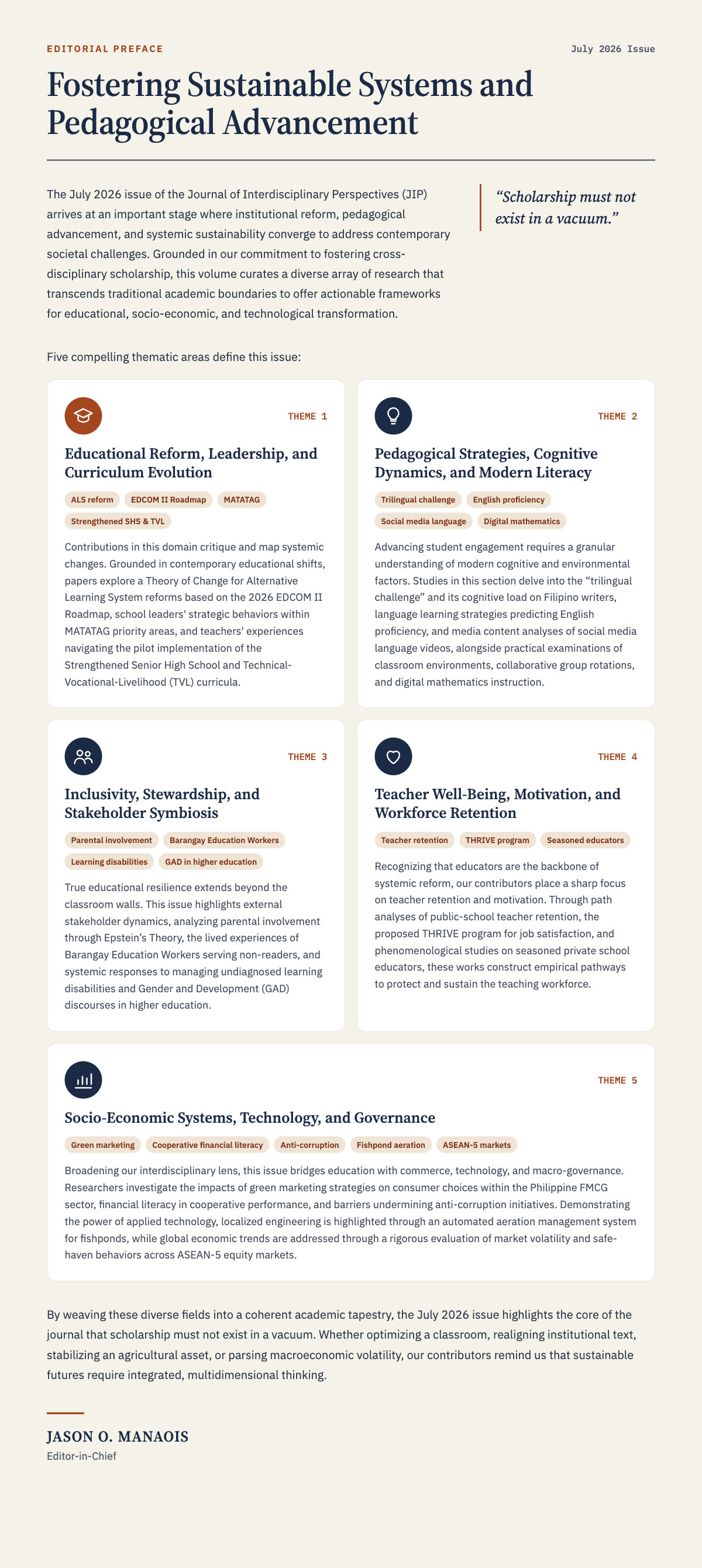
As we welcome the first issue of 2026, the Journal of Interdisciplinary Perspectives reaffirms its mission to publish scholarly works that bridge disciplines, cultures, and communities. This volume exemplifies our commitment to accessible, rigorous, and socially relevant research, presenting readers with studies that address enduring concerns while embracing emerging innovations.
Several compelling themes define this issue:
- Resilience and Human Experience
Articles such as “Carrying the Burden: Lived Psychological Struggles of Caregivers Raising Children with Neurodevelopmental Conditions” and “The Mediating Role of Resilience on the Relationship Between Childhood Trauma Exposure and Narcissistic Traits of Transgender Individuals” illuminate the human capacity to adapt and endure, while underscoring the importance of supportive interventions. - Education and Pedagogy in Transition
Studies on code-switching among Filipino pre-service teachers, teachers’ readiness in teaching Filipino literature, and mentorship in culturally responsive pedagogy highlight the evolving landscape of education. These works reflect the challenges and opportunities of preparing educators for diverse, multilingual, and culturally rich classrooms. - Technology, AI, and Ethics
Timely explorations such as “Navigating Ethical Boundaries: AI-Driven Data Collection and Analysis in Academic Research” and “The Mediating Role of AI Literacy in Graduate Seminar Coursework and Ethical Preparedness” remind us that technological innovation must be accompanied by ethical reflection and responsible application. - Business, Sustainability, and Economics
From selling strategies of rice retailers in rural settings to systematic reviews on disaster economics and digital marketing adoption among entrepreneurs, this issue foregrounds the intersection of commerce, resilience, and sustainability, offering insights into how local practices connect with global economic trends. - Culture, Identity, and Tradition
Works such as “Narrative Patterns and Cultural Transmission in Masbateños” and “Exploring the Dynamics of Maguindanaon Kawing (Marriage)” enrich our understanding of cultural continuity and transformation, affirming the journal’s dedication to preserving and interrogating heritage through scholarly inquiry.
Out of forty carefully selected articles featured in this inaugural issue of 2026, each contributes to setting a strong tone for the year ahead—interdisciplinary, innovative, and deeply responsive to the challenges and opportunities of our time. We invite readers, scholars, and practitioners to immerse themselves in these works, to extend their insights, and to join us in charting bold new pathways for research and professional practice.
DR. JASON O. MANAOIS
Editor-in-Chief - Resilience and Human Experience